
Pros and Cons of Living in Tucson — the Honest Version
Every relocation site lists the same brochure pros. Here's the version from the ground: what people who move here actually celebrate, and what actually wears on them.
 By Marisol Rodriguez, editor & host of TucsonBound
What are the pros and cons of living in Tucson?
The short answer: The pros are real affordability — a median home near $370,000 in a metro of about one million people — Sonoran Desert scenery with Saguaro National Park at the city's edge, mild sunny winters, a UNESCO City of Gastronomy food scene, and a slower, fiercely local pace. The cons are summer heat above 100°F from June through September, sprawl and car dependence, a thinner job market than Phoenix, and monsoon storms and desert wildlife to learn to live with. The full, honest breakdown follows.
The pros
Real affordability in a real city. A ~$370K median home price with a million-person metro's hospitals, university, airport, and arts scene is a combination that barely exists anymore in the West.
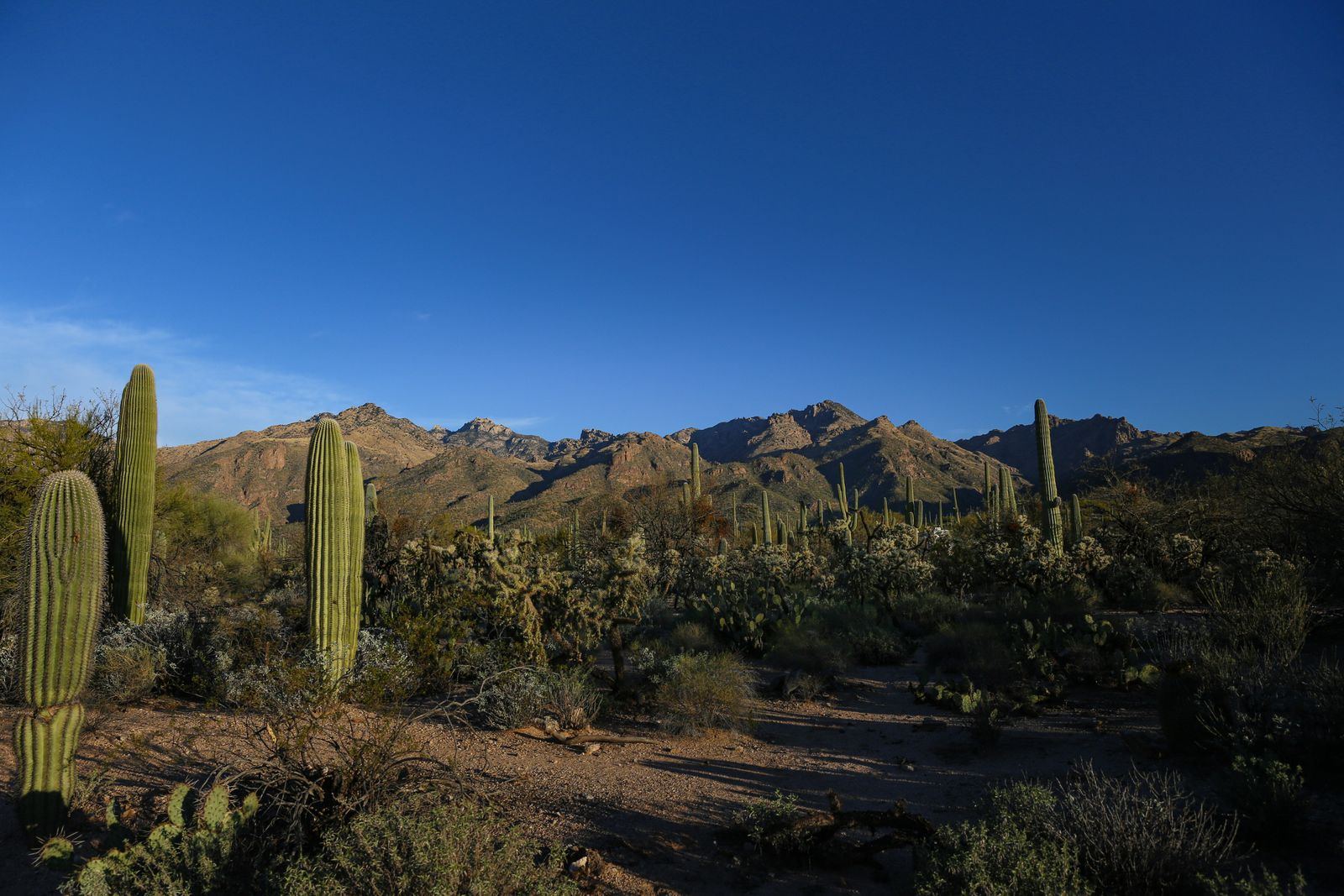
The desert is not a backdrop, it's the lifestyle. Saguaro National Park borders the city on two sides. Trails start at the edge of neighborhoods. Sunsets are a daily event people plan around.
Winter is perfect. November through March: 60s–70s, sun, patio weather. This is why the snowbirds come, and full-timers get it free with the house.
The food. First U.S. UNESCO City of Gastronomy. Sonoran Mexican food here is a regional cuisine, not a category.
The pace and the sky. Tucson never tried to become Phoenix. It's slower, older, a little scruffy, fiercely local — and the dark skies and mountain silhouettes reset people in a way they don't expect.
The cons
Summer heat is a genuine lifestyle constraint. June through September means 100°F+ stretches. You adapt — early mornings, shade, A/C, mountain escapes — or you don't, and those who don't usually leave within two summers. Visit in July before you buy if you can.
Sprawl and car dependence. The metro is wide and low-density. Most errands are a drive; public transit exists but won't run your life. Some central corridors have rough edges, and property crime in parts of the city runs above national averages — which is why neighborhood selection matters more here than in most cities.
The job market is thinner than Phoenix. Strong in defense (Raytheon, Davis-Monthan AFB), healthcare, the university, optics and mining tech — soft outside those lanes. Many movers bring a remote job with them, and the math works best that way.
Monsoon and desert realities. July–September storms flood washes and close roads briefly; everything outdoors has thorns, stings, or both. Desert living is wonderful and mildly adversarial.
Who thrives here, who doesn't
Thrives: remote workers, retirees, outdoors people, food people, anyone trading a coastal mortgage for a life. Struggles: nightlife-first urbanites, transit-dependent movers, heat-sensitive households, and anyone who needs a deep local job market in a niche field. If you're in the first group, read the full relocation guide next.
Frequently asked questions
What are the pros and cons of living in Tucson? Pros: affordability (a ~$370K median home), desert scenery, mild winters, the food scene, and a slower pace. Cons: 100°F+ summers, sprawl and car dependence, a thinner job market than Phoenix, and monsoon season.
Who should not move to Tucson? Nightlife-first urbanites, transit-dependent movers, heat-sensitive households, and anyone who needs a deep local job market in a niche field.
Is Tucson a good place to live overall? For the right mover, yes — a real city's amenities at housing costs well below the West's norms, provided you can schedule around the summer and your work is portable or in defense, health care, education, or optics.