
Tucson Rewrites Rents and Screening for Its 330 City-Owned Homes — New Rules Start Dec. 1
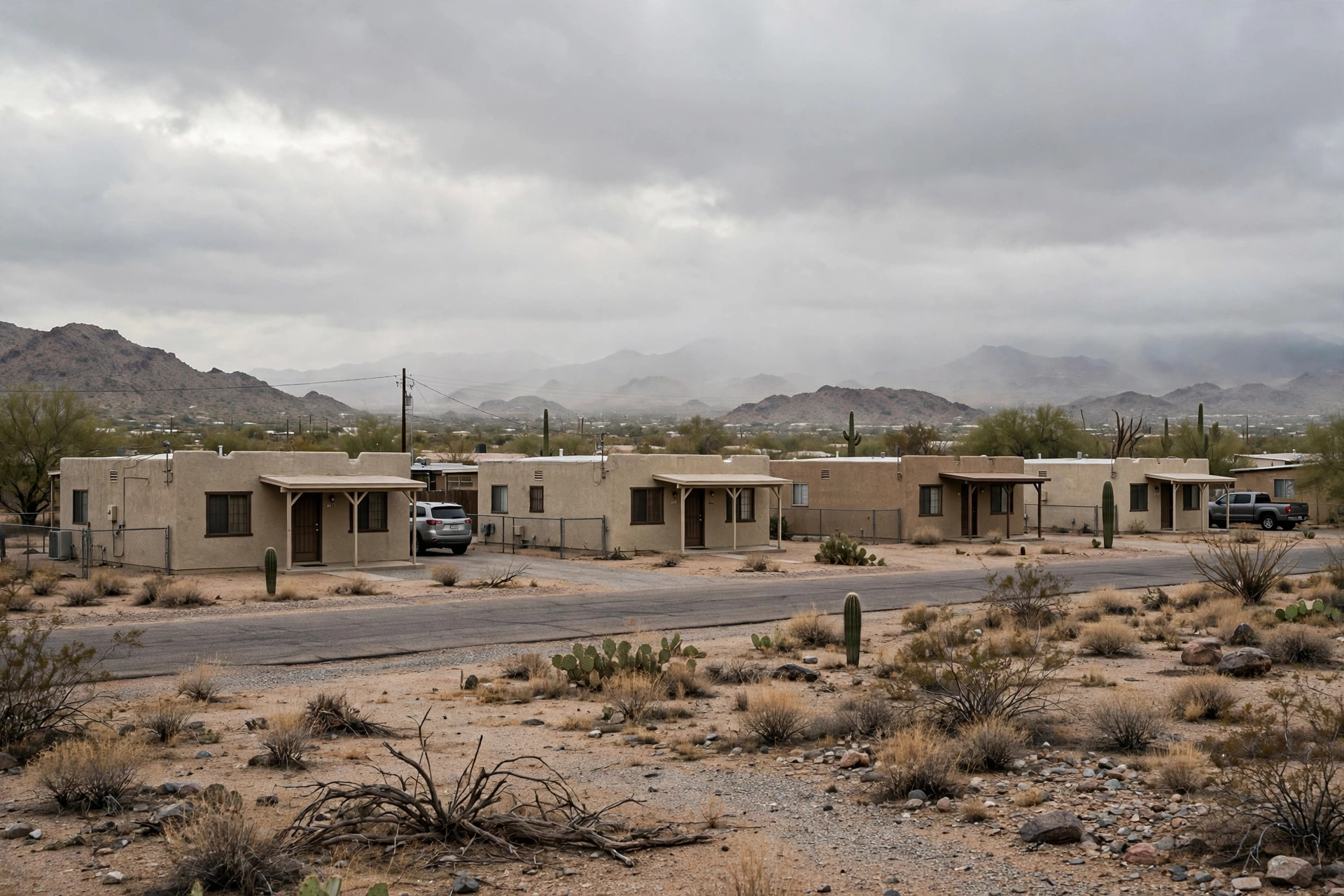
About 330 city-owned rental homes scattered across Tucson are getting a full overhaul of how rents are set, who qualifies to move in, and what tenants pay upfront. The City's Housing and Community Development Department has put together a new operating policies package for the El Portal Affordable Housing portfolio — the city-owned rentals that sit outside the federal public housing system — and the new rent-setting policy takes effect December 1, Realtor.com reported on November 3.
 By Marisol Rodriguez, editor & host of TucsonBound
November 4, 2026 · Source: Realtor.com (Nov. 3, 2026), reporting the City of Tucson Housing and Community Development Department's El Portal operating policies package
How the new rents work
For unassisted units — homes without a federal rental subsidy attached — the starting benchmark is 75% of HUD's Fair Market Rent, the federal standard set each year for the Tucson metro by bedroom size. After adjustments, gross rent cannot exceed 90% of Fair Market Rent. That ceiling is written into the policy, not left to discretion. Detached single-family homes in the portfolio carry a $75 monthly adjustment on top of the benchmark, reflecting higher operating and maintenance costs, while units with drawbacks like evaporative-only cooling or no on-site laundry may see downward adjustments.
Existing tenants are protected from a shock bill: increases for current tenants in unassisted units are capped at $100 per month per year, and only by the amount needed to reach the contract rent. Move-in costs are standardized too — a one-month refundable deposit plus a flat $350 administrative fee — and a new El Portal Hardship Fund exists so those upfront costs do not lock low-income households out.
Who qualifies, and how screening changes
The package sets consistent minimum and maximum income standards across the portfolio. Tenants receiving ongoing rental assistance — Housing Choice Vouchers, project-based vouchers, Continuum of Care assistance, and similar programs — automatically satisfy the minimum income requirement. The maximum income cap is 2.5 times the monthly Fair Market Rent, the level at which a household can rent privately without being cost-burdened. A tenant whose income rises above the cap at renewal is not put out immediately: an over-income transition process offers time to find other housing, or a limited additional lease at an FMR-based rent. Screening gets narrower too — criminal background requirements align with federal program rules, rehabilitation and disputed records must be considered before a final decision, and credit review focuses on unpaid housing-related obligations, not a household's whole financial history.
Why the city is doing this
The driver is money, stated plainly in the reporting: persistent operating deficits have limited the portfolio's ability to fund maintenance and capital needs, because most El Portal units currently carry no ongoing subsidy. The plan is to attach project-based housing vouchers to as many units as feasible — up to 120 in the current plan year and at least 70 more in 2027 — which HCD estimates could generate $1,146,708 in additional annual rental revenue at high occupancy. Forty-eight units at Fry Apartments already receive HUD project-based assistance and 41 receive Continuum of Care assistance. Current residents get first priority on the new voucher waiting lists, so the expansion does not displace the people already living there. The full package is posted on the city's website and is up for review and approval by the Commission on Equitable Housing and Development.
Why it matters for movers
If you are moving to Tucson on a tight budget, this portfolio is one of the few structured, below-market routes into a city-owned home — and from December 1 the rules for getting in, and for what you will pay, are clearer than they have been. The honest limit: 330 homes is a small portfolio in a metro of a million people, and waiting lists are the norm. Treat El Portal as one application among several, not a plan by itself — a policy taking effect is not the same as a unit being available, so keep hunting the private market in parallel. For the wider rental picture, see how much it costs to live in Tucson per month, our cost of living guide, and the monthly market report.
Related: the same affordability squeeze is driving a private experiment — Boxes of Hope's plan for 350–450 container homes with La Frontera.