
What Is Winter Like in Tucson for Snowbirds?
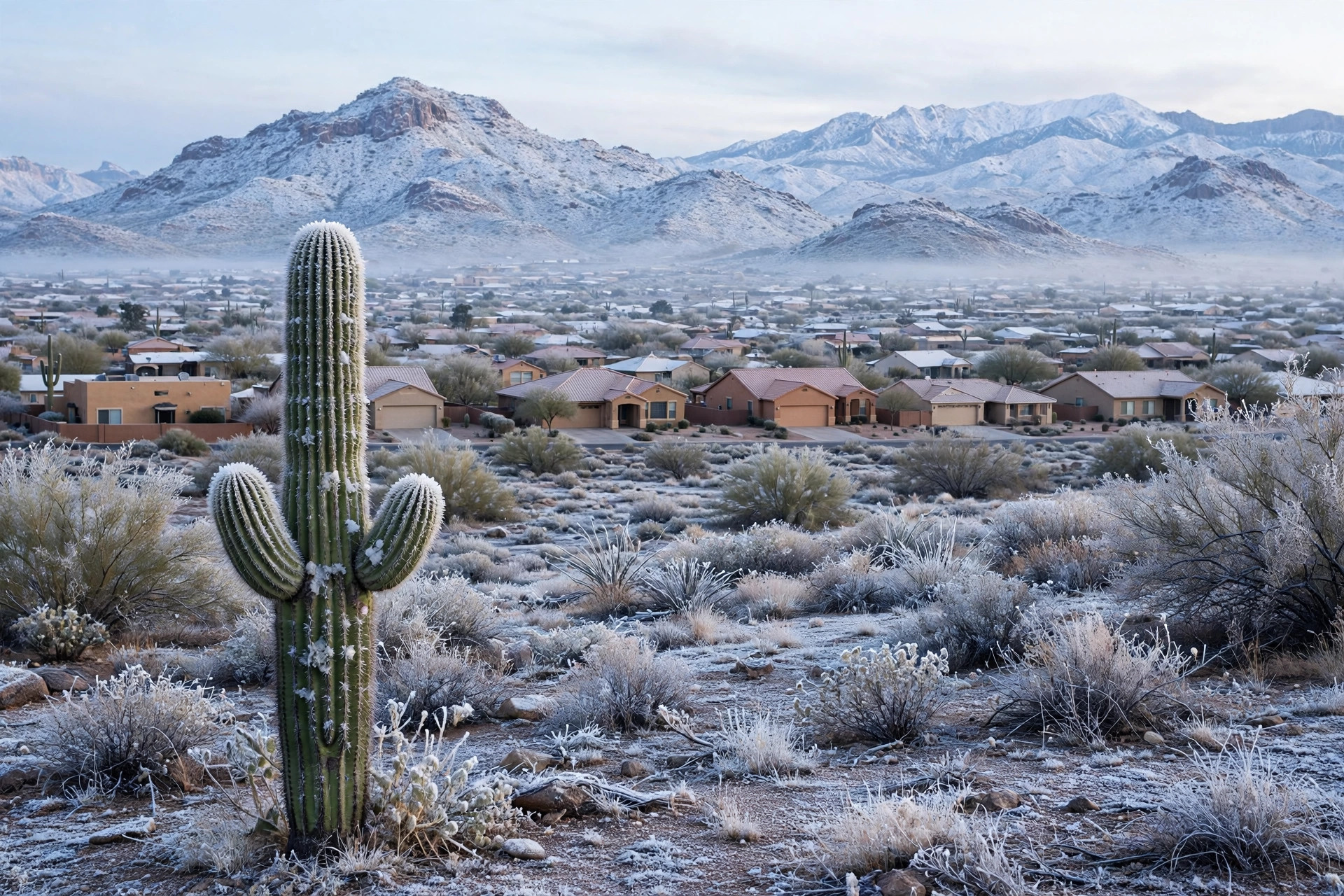
Winter in Tucson is mild, sunny, and dry. From December through February, average daytime highs run 66 to 71 degrees with overnight lows in the high 30s to low 40s, the sun shines on most days in a city that averages about 350 days of sunshine a year, and snow in the city itself is a rare event that melts by midday. Days are made for patios, hiking, and golf; nights call for a real jacket, and a few nights each winter dip to freezing. The trade-offs are short days, occasional winter rain, and peak-season prices and crowds from January through March.
 By Marisol Rodriguez, editor & host of TucsonBound
The winter months, by the numbers
Our year-round Tucson weather guide tracks the averages month by month, and the snowbird season is the best stretch of the year. November opens at about 76°F by day and 46°F at night. December and January are the coolest months — highs of 66 to 67°F, lows of 38 to 39°F — and February warms to about 71°F by day. March, at 78°F, is the month locals will tell you is the best of the year. In other words: the coldest Tucson winter day is, for most northern arrivals, a mild fall day at home — and it comes with sun.
Sunshine, rain, and the snow question
Winter is Tucson's dry season. Most of the year's rain falls in the summer monsoon (mid-June through September), so winter weeks run sunny and clear, broken occasionally by a Pacific storm that brings a gray day or two and then moves on. Snow is the question every first-season snowbird asks, and the answer is simple: in the city, almost never — an occasional dusting that is gone by midday, and many winters none at all. If you want snow, it is waiting about an hour up the Catalina Highway on Mt. Lemmon, which runs roughly 30 degrees cooler than the city floor. You can hike in a t-shirt in the morning and look up at a white peak by lunch.
What a winter day actually feels like
The rhythm takes a week to learn. Mornings start cold — on the coldest nights, lows near freezing mean frost to scrape and a jacket until mid-morning. By late morning the sun takes over: patios fill, tee times and trailheads are busy, and short sleeves are normal by early afternoon. Then the desert gives the heat back fast. Once the sun drops behind the mountains, temperatures fall quickly, and dinner on the patio means the jacket comes back out. Layers are not a packing tip here; they are the whole wardrobe strategy. If you are still deciding where to base yourself for the season, our snowbird guide compares the areas winter residents actually settle in, from Oro Valley to Green Valley.
The season is the social season
Winter is when Tucson is fully awake. The calendar carries the city's biggest draws — the gem shows that take over venues across the city in late January and February, the Tucson Rodeo in February — and restaurants, golf courses, and trailheads all run at their busiest from January through March. That energy is the fun of the season, and it is also the catch: prime-season winter rentals are booked months ahead and priced at their peak, and the best dinner reservations go early. Snowbirds who arrive in October or November get the same weather with a quieter city — and, often, a better rental. For where those rentals, communities, and second homes actually are, see where snowbirds stay in Tucson.
The honest catches
Three, and none of them is a deal-breaker if you know it is coming. First, the days are short: around the winter solstice Tucson gets roughly ten hours of daylight, so winter life runs earlier than summer visitors expect. Second, cold snaps are real — a few nights each winter dip to freezing, enough that exposed pipes and tender desert plants need protection, and a genuinely rainy week can happen once or twice a season. Third, winter is a season, not a cure-all: if you fall for the place (many do), the question becomes summer, which is a different negotiation entirely — start with is Tucson a good place to retire? for the full-year picture, including taxes and health care.
My honest summary after editing every winter guide on this site: people do not come back year after year because Tucson winter is perfect. They come back because it is reliably, almost boringly good — sun, 60s and 70s, and a city running at full tilt — while home is under snow. Boring, in February, is a feature.
Frequently asked questions
What is winter like in Tucson for snowbirds? Mild, sunny, and dry — average highs of 66 to 71°F from December through February, lows in the high 30s to low 40s, sunshine most days, and snow in the city only as a rare, fast-melting dusting.
Does it snow in Tucson in winter? Almost never in the city itself. Real snow falls on Mt. Lemmon, about an hour up the Catalina Highway, which runs roughly 30 degrees cooler than the city.
What should snowbirds pack for a Tucson winter? Layers: a warm jacket for mornings and evenings, sun protection for midday, and closed shoes for desert trails. The heavy winter coat can stay home.
When is peak snowbird season in Tucson? January through March, when rentals are scarcest and prices highest. Many snowbirds arrive in October or November and leave in April.